
Projects
Screen Green
2015-2016
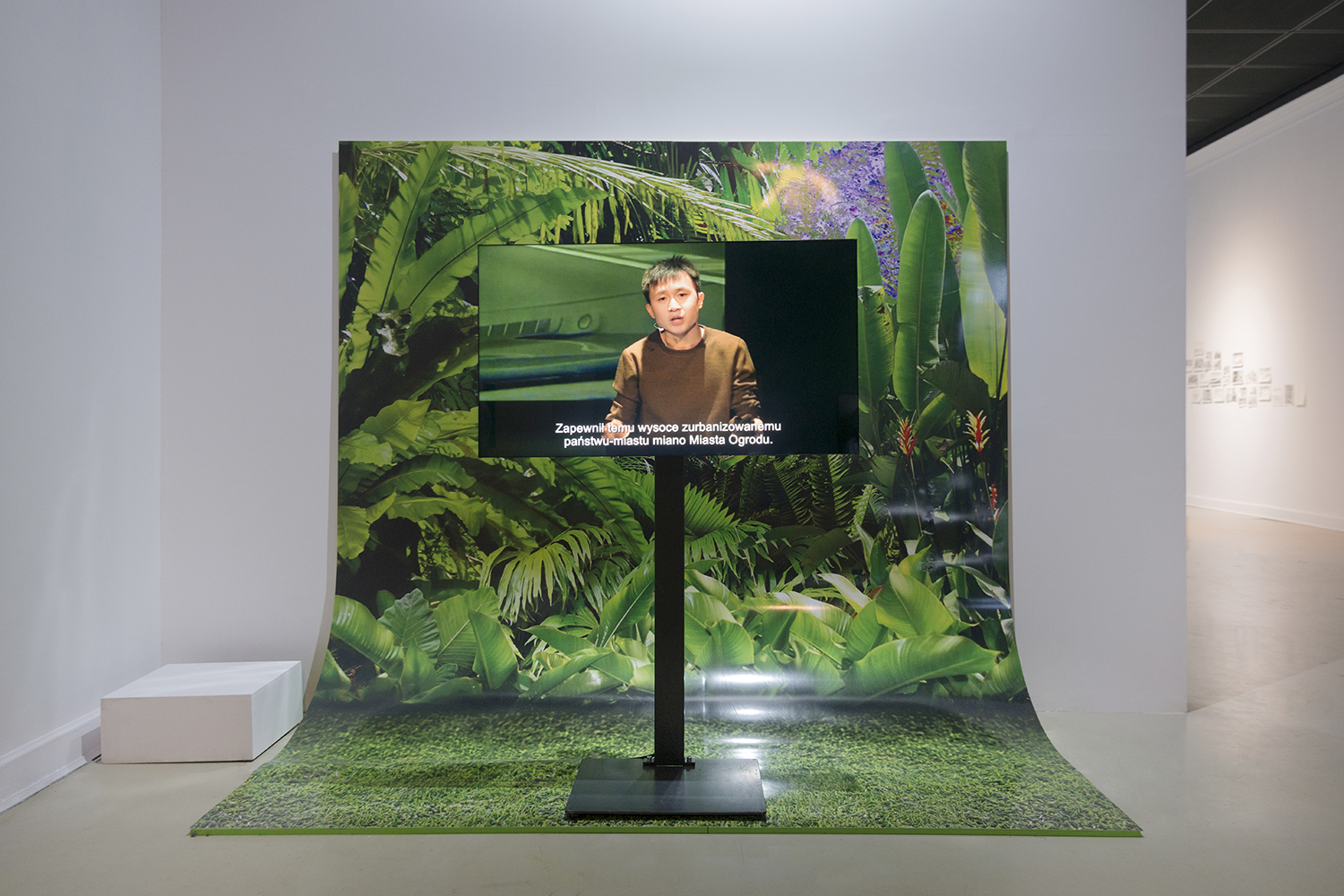
Ho Rui An, Screen Green, 2015-2016. Lecture and video installation with green screen, approx 50 minutes. Installation view, Public Spirits, Centre for Contemporary Art Ujazdowski Castle, Warsaw, Poland, 22.10.2016–15.01.2017. Photography by Bartosz Gorka. Courtesy of Centre for Contemporary Art Ujazdowski Castle.
"Screen Green investigates the convergences between the politics of screening and greening by taking the notion of the “green screen” on a botanical turn. The lecture takes as a point of departure the telecast of a speech made by the Prime Minister of Singapore, Lee Hsien Loong, during which the man was pictured against a homogenous green backdrop that is incidentally of the shade used in special effects compositing. Encountering this “green screen” with the lush greenery that covers the city-state, it considers how the numerous green spaces in Singapore act as giant green screen studios that solicit the participation and imagination of the masses only in order to limit and modulate the articulations that are thus produced." [1]
[1] https://horuian.com/screen-green/
Solar: A Meltdown
2014-2017
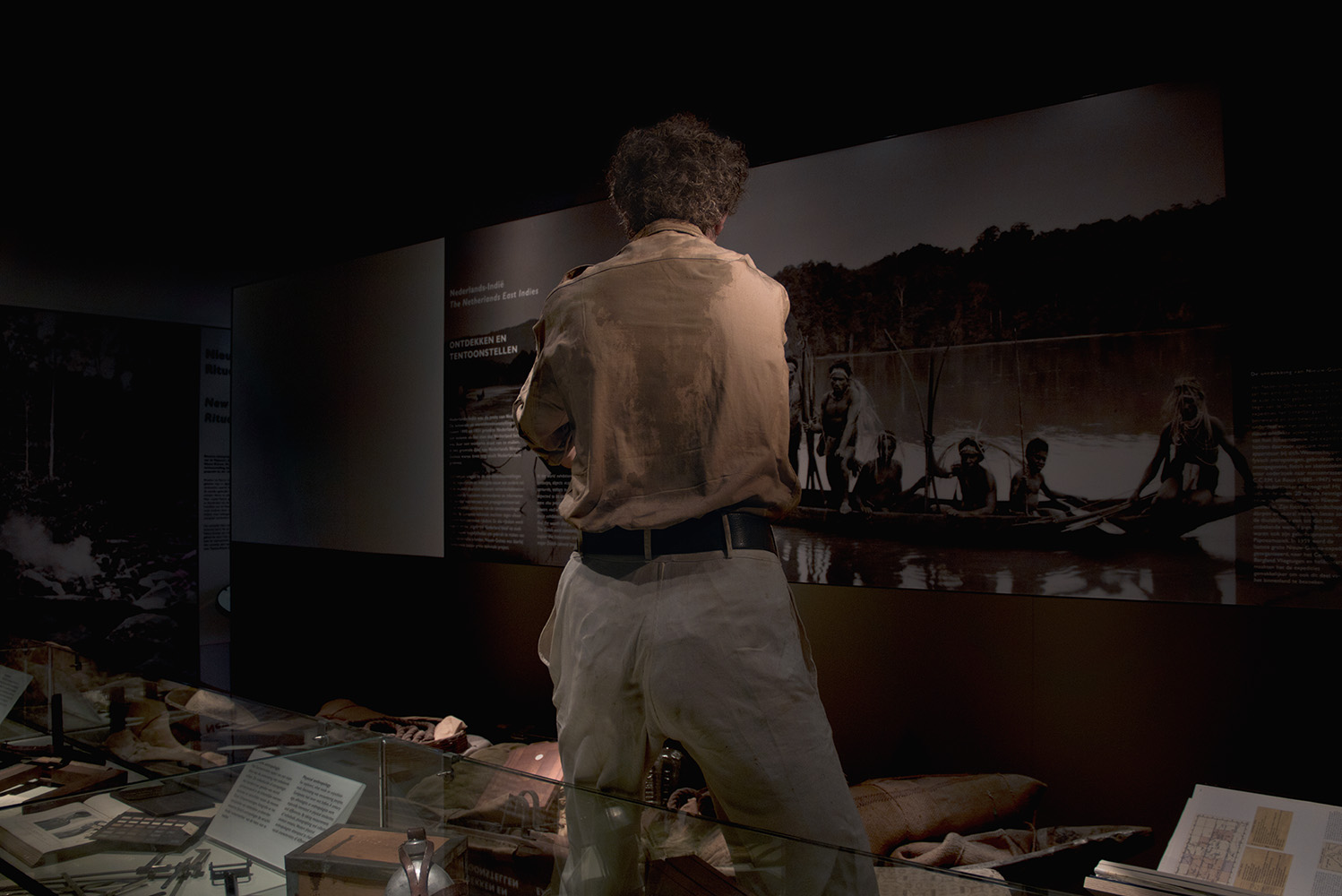
Ho Rui An, Solar: A Meltdown, 2014-2017. Lecture and video installation with digital print, solar-powered toy and punka (colonial fan), approx 1 hour. Courtesy the artist.
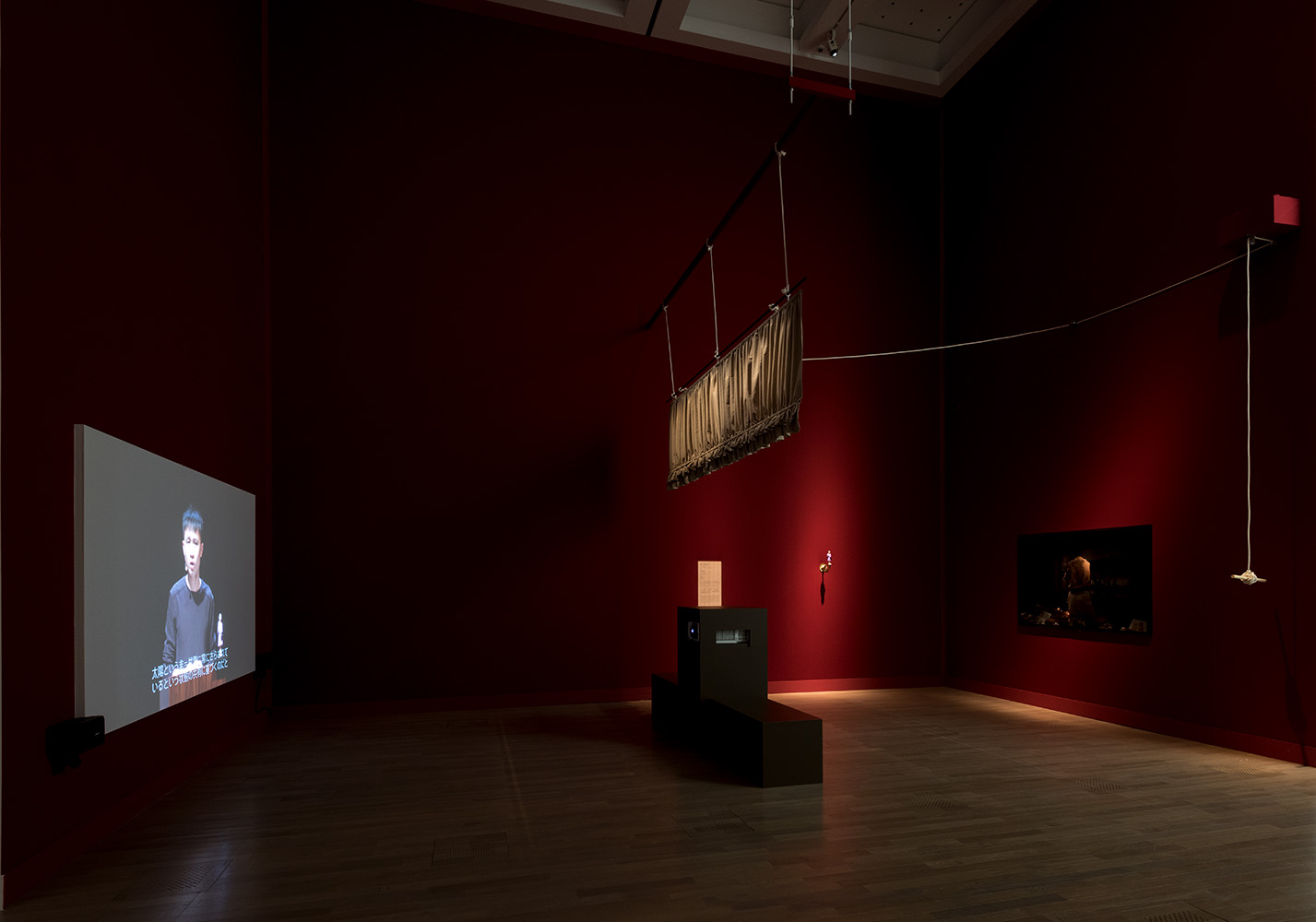
Ho Rui An, Solar: A Meltdown, 2014-2017. Lecture and video installation with digital print, solar-powered toy and punka (colonial fan), approx 1 hour. Installation View, SUNSHOWER: Contemporary Art from Southeast Asia 1980s to Now, The National Art Center, Tokyo, and Mori Art Museum, Japan, 05.07–23.10.2017. Photography by Norihiro Uen. Courtesy of The National Art Center, Tokyo.
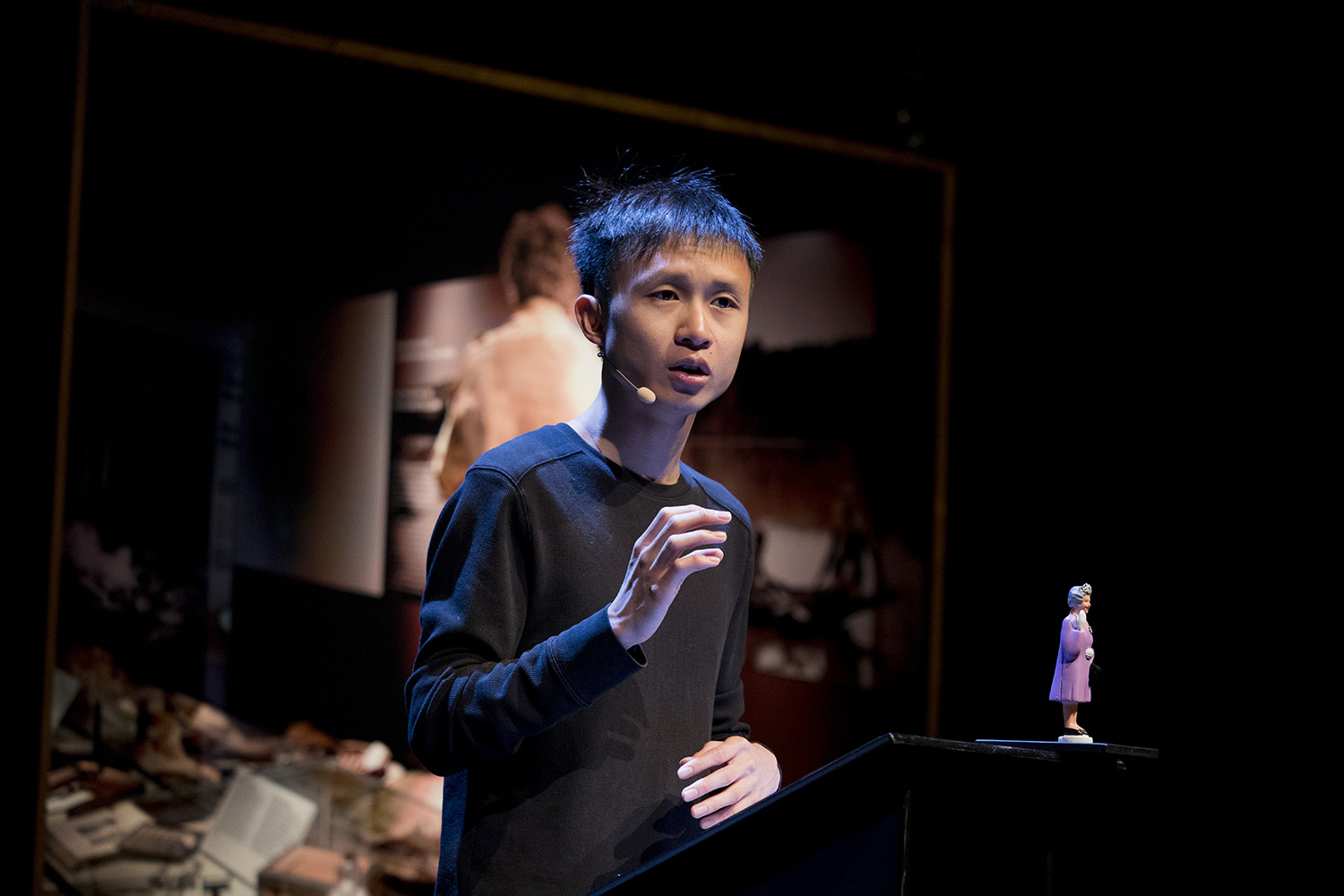
Ho Rui An, Solar: A Meltdown, 2014-2017. Lecture and video installation with digital print, solar-powered toy and punka (colonial fan), approx 1 hour. Performance documentation, Theatertreffen, Berliner Festspiele, Berlin, Germany, 15.05.2018. Photography by Eike Walkenhorst. Courtesy of Berliner Festspiele.
"Solar: A Meltdown is a lecture that takes off from the sweaty back of a wax figure of the anthropologist Charles Le Roux that the artist encountered in the Tropenmuseum in Amsterdam. From this image launches a series of investigations getting to the “behinds” of Empire and more crucially, the merciless sun behind it, beating down on the imperial back. Probing this “solar unconscious” underpinning the European colonial project, the lecture further considers the white woman and the punkawallah (manual fan operator) as figures constitutive of a “global domestic”—an all-encompassing, air-conditioned planetary interior. Spiralling into the contemporary moment of terrestrial meltdown, it finally seeks to reclaim sweat as a way of getting out of ourselves and in touch with the Solar." [2]
[2] https://horuian.com/solar-a-meltdown/
Shell Revolution
2018
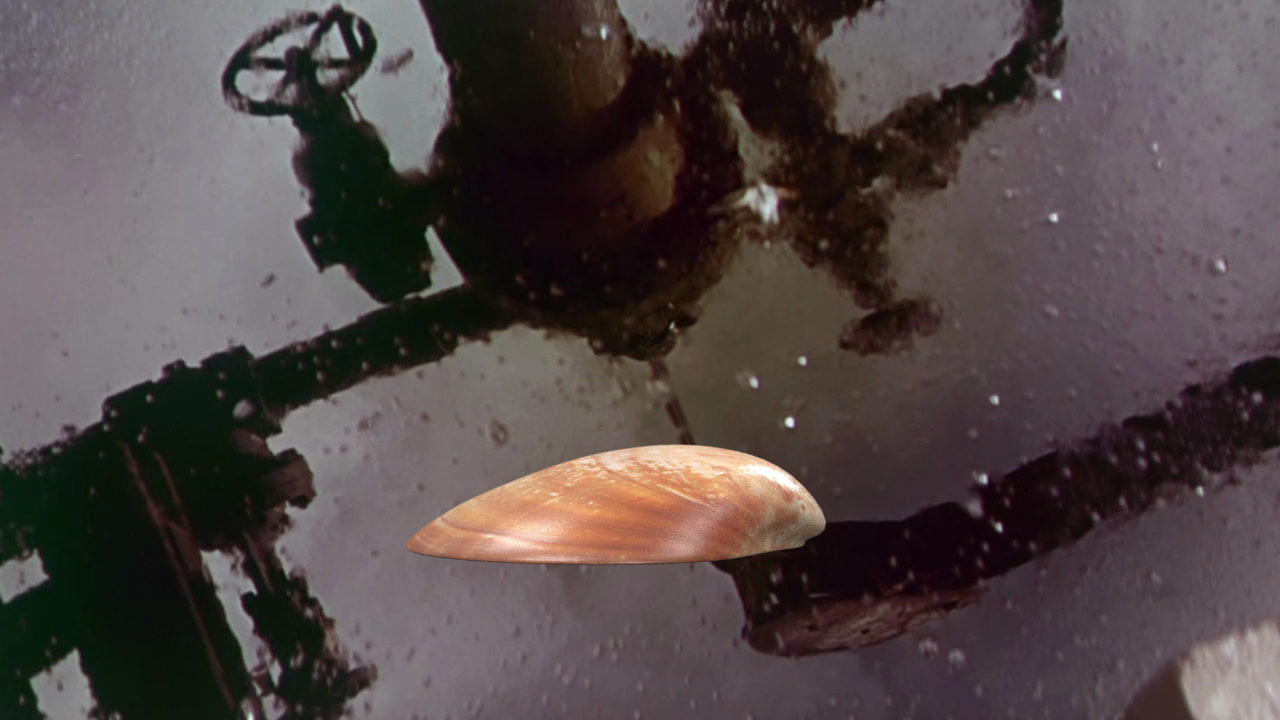
Ho Rui An, Shell Revolution, 2018. HD video, 1' 10". Courtesy of the artist.
"Shell Revolution is a 3D animation that tracks the transformation of the Shell logo over the years, as it morphs from a naturalistic seashell to its current graphic form—an evolution that succinctly encapsulates the oil industry’s growing alienation from and destruction of the natural world." [3]
[3] https://horuian.com/shell-revolution/
Biography

Ho Rui An is an artist and writer working in the intersections of contemporary art, cinema, performance and theory. Through lectures, essays and films, his research examines the relations between labour, technology and capital across different systems of governance in a global age. He has presented projects at the Shanghai Biennale; Bangkok Art Biennale; Gwangju Biennale; Jakarta Biennale; Kochi-Muziris Biennale; Haus der Kulturen der Welt, Berlin; Kunsthalle Wien; Singapore Art Museum; Van Abbemuseum, Eindhoven; and Yamaguchi Center for Arts and Media, Japan.