
Wang Ruobing, Tide, 2023. Courtesy the artist.
Projects
Over the Horizon
2016
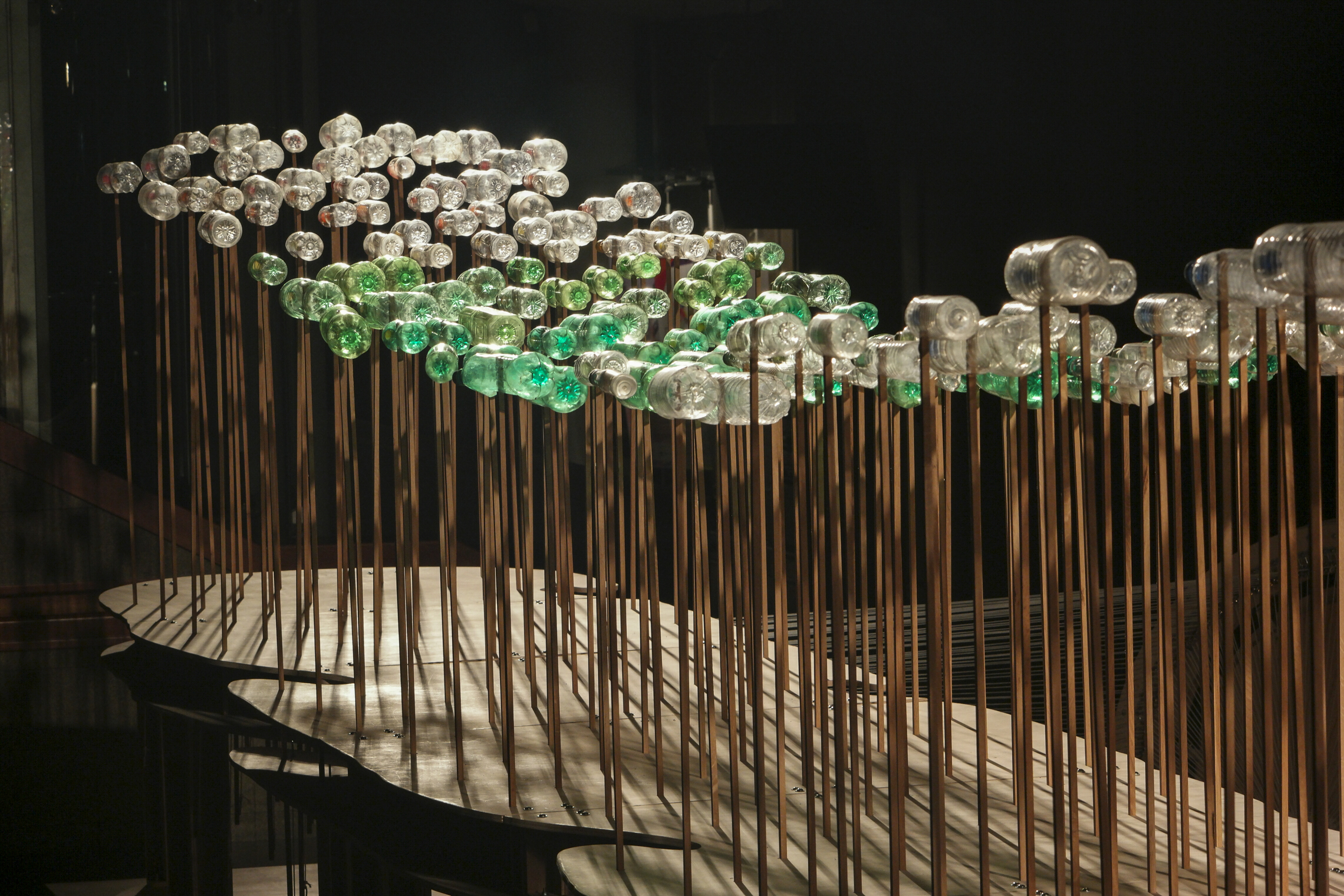
Wang Ruobing, Over the Horizon, 2016. Photo by Ken Cheong. Courtesy the artist.
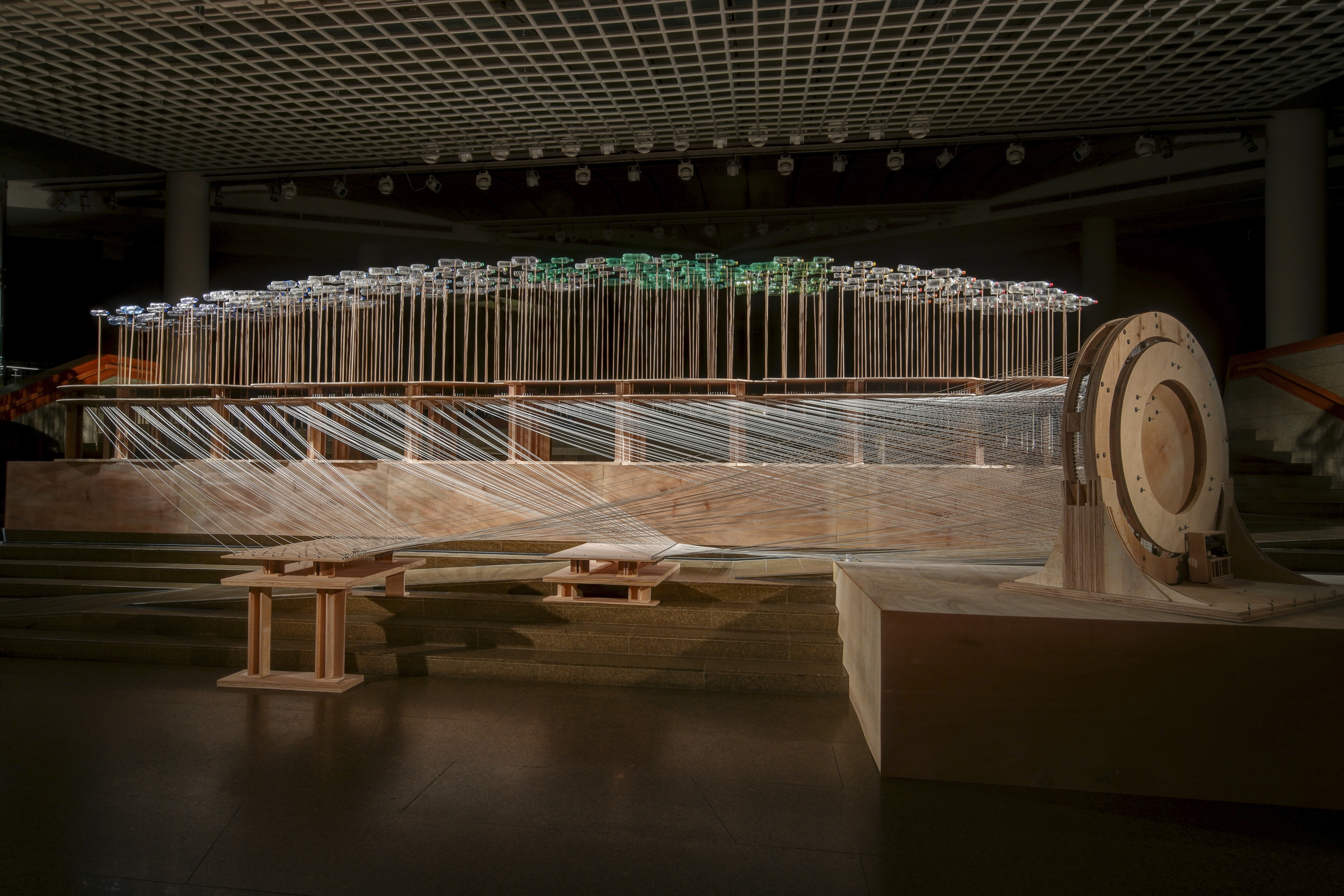
Wang Ruobing, Over the Horizon, 2016. Photo by Ken Cheong. Courtesy the artist.
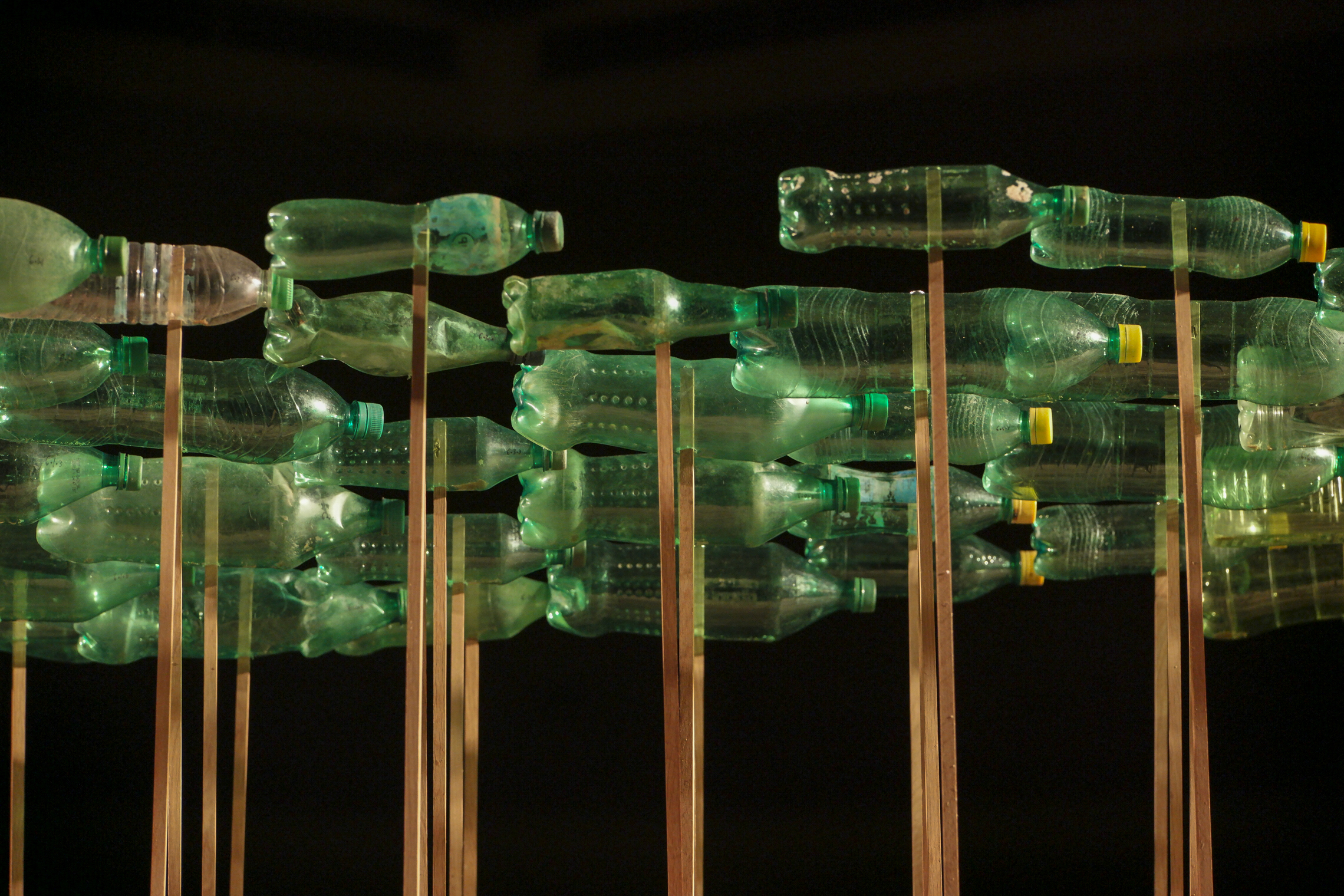
Wang Ruobing, Over the Horizon, 2016. Photo by Ken Cheong. Courtesy the artist.
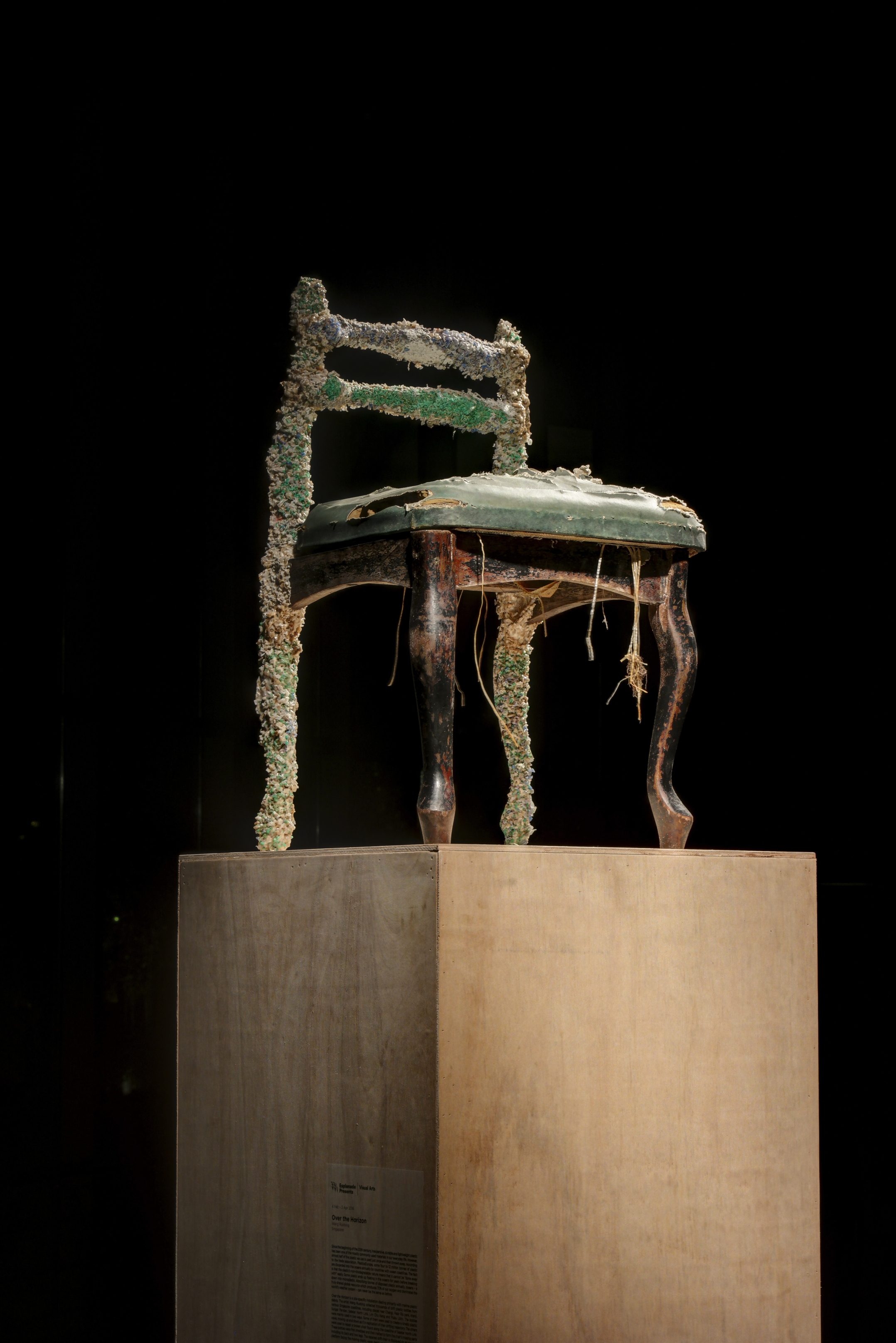
Wang Ruobing, Over the Horizon, 2016. Photo by Ken Cheong. Courtesy the artist.
A site-specific installation dealing primarily with marine plastic debris. The artist Wang Ruobing collected thousands of drift plastic bottles from various Singaporean coastlines, including places near Changi, Pasir Ris park, Kranji, Sungei Pandan, Seletar North Link, Lim Chu Kang and Pulan Ubin. The bottles were mainly used in two ways. Some of them were used to create a kinetic plastic wave, moving up and down as if in replication of their drifting trajectory. The others were used to repair a broken chair found along the coastline of Seletar North Link. These bottles were first shredded and then melted to form the chair’s missing parts including its back and two legs. The repaired drift chair is displayed on an elevated platform facing the moving plastic wave, gently gazing at the horizon.
Over the Horizon visualises the imaginary boundary between the earth and the sky with the recycled plastic debris. Highlighting the interdependency of individual activities, the installation reveals the free and boundless exchanges that exist beneath the surface of the sea.
Text provided by the artist.
Wang Ruobing, Over the Horizon, 2016. Video by Ken Cheong.
Three Planks (Sampan 三板)
2021
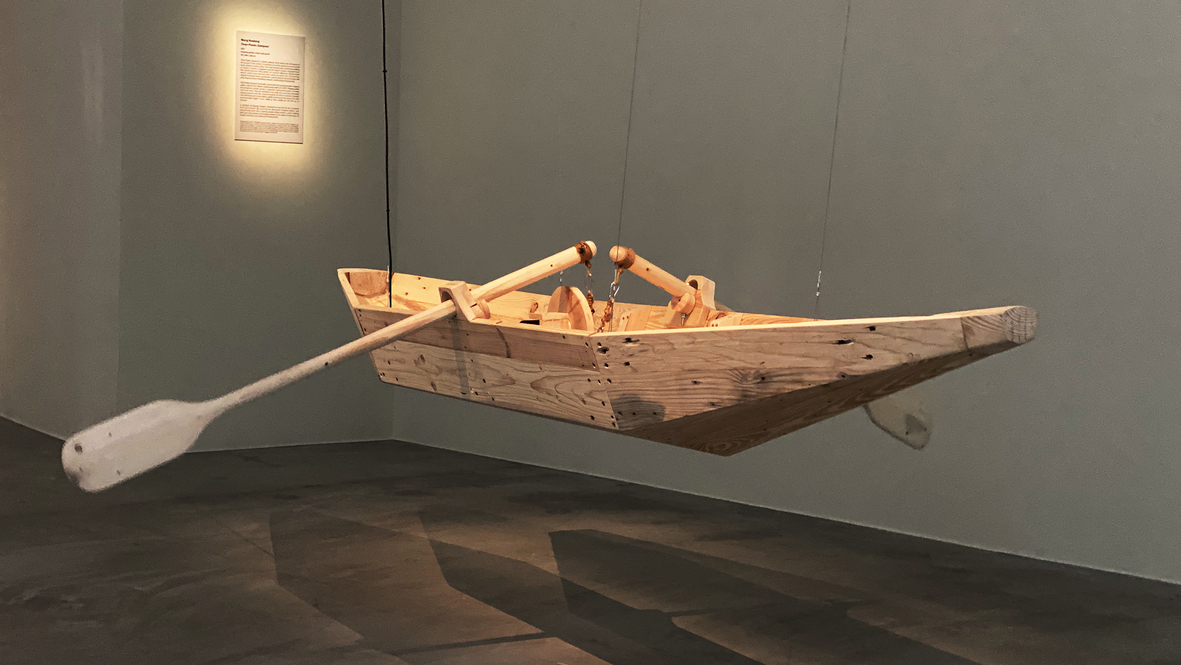
Wang Ruobing, Three Planks, 2021. Courtesy the artist.
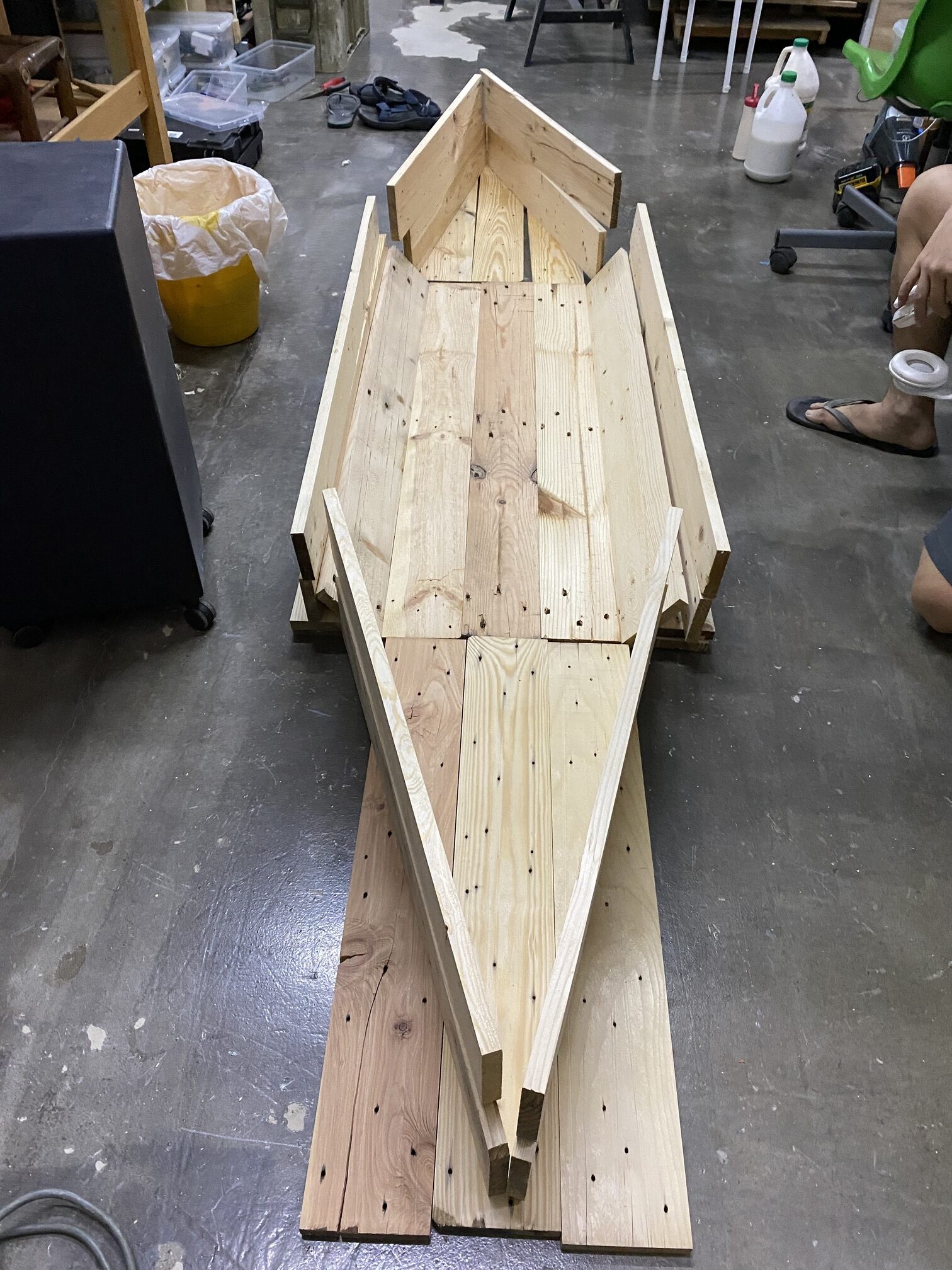
Process image for Three Planks, 2021. Courtesy the artist.
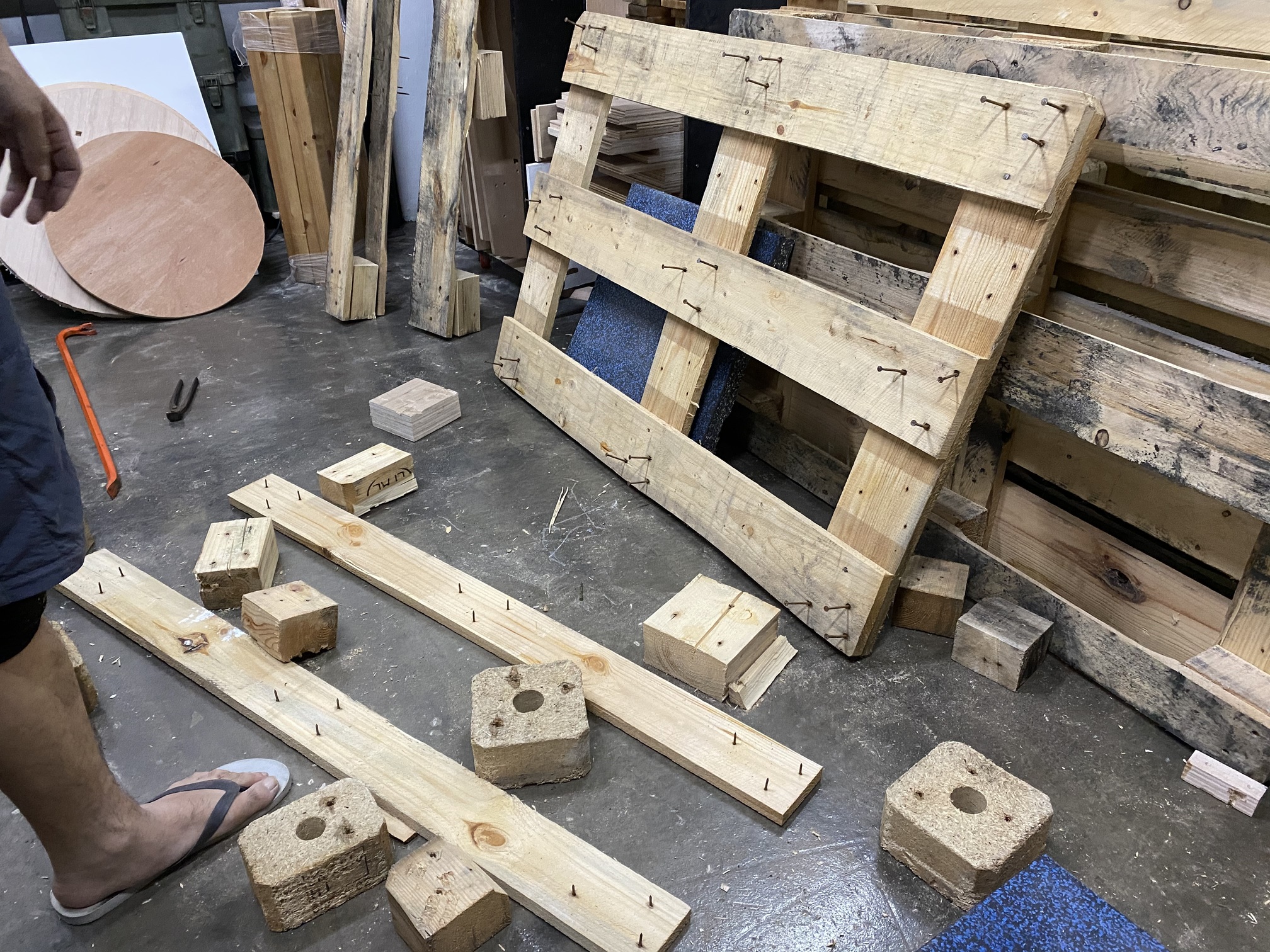
Process image for Three Planks, 2021. Courtesy the artist.
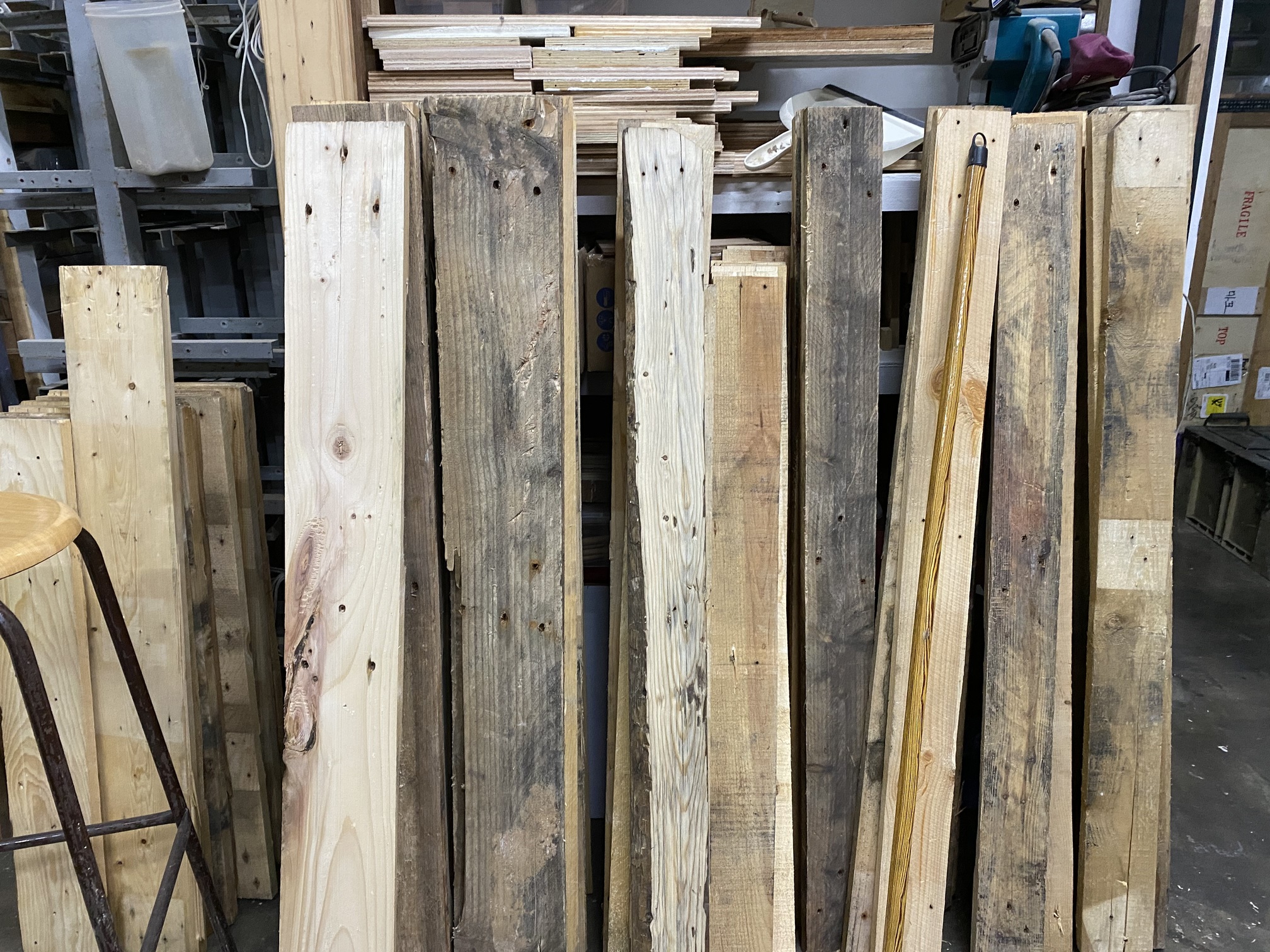
Process image for Three Planks, 2021. Courtesy the artist.
Three Planks (Sampan 三板 ) is a kinetic artwork looking into the history of sampan in the contexts of Southeast Asia in parallel with the exploration of the environmental issues related to marine culture. A sampan, a small wooden boat powered by paddling or rowing, is commonly known in Singapore and the region. Sampan originated from the Chinese term “三板” (hanyu pinyin “san ban”), which means “three boards” or “three planks”, in reference to Chinese boats constructed using a flat plank to form the base and two planks for either side. Over time, the word sampan entered Southeast Asian vocabularies and became especially well-known from the popular Indonesian folk song “Dayung Sampan”, literally translated as “Paddling a Sampan”.
Three Planks (Sampan) is a kinetic rowing boat constructed mainly from recycled wooden shipping pallets accompanied with vocal humming of the folk song “Dayung Sampan”. Shipping pallets, also known as skids, are designed to protect goods in shipment and help make them more easily handled, stacked and moved. The majority of them are made from wood. According to Environmental Leader, nearly 2 billion wooden pallets are currently in circulation in the United States alone, with a majority of them replaced each year. This means roughly half of these pallets are intended to be used only once and then discarded, which undoubtedly raises the concerns of overconsumption of natural resources in the global context. Similar to driftwoods and marine debris, shipping pallets travel from one place to another with the ocean currents. But their environmental consequences are less visible as they usually do not end up stranded on the beach.
The shipping pallets used in making this artwork were collected from the artist’s studio neighbour SG CARDS. SG CARDS is a game distributor importing games from all over the world to supply the local market. Shipping pallets are the frequent additional bulk that comes with their shipments, which are discarded in open skips after the goods are unloaded. By recycling the discarded shipping pallets and transforming them into a rowing sampan, the artist intends to create a prism holding both the past and current, encouraging the viewers to be made aware, afresh of the culture and environment around them.
Sound: Fran Ho Fei Fan 何斐凡, Video: Ken Cheong
Text provided by artist.
Wang Ruobing, Three Planks, 2021. Video by Ken Cheong.
Tide
2023
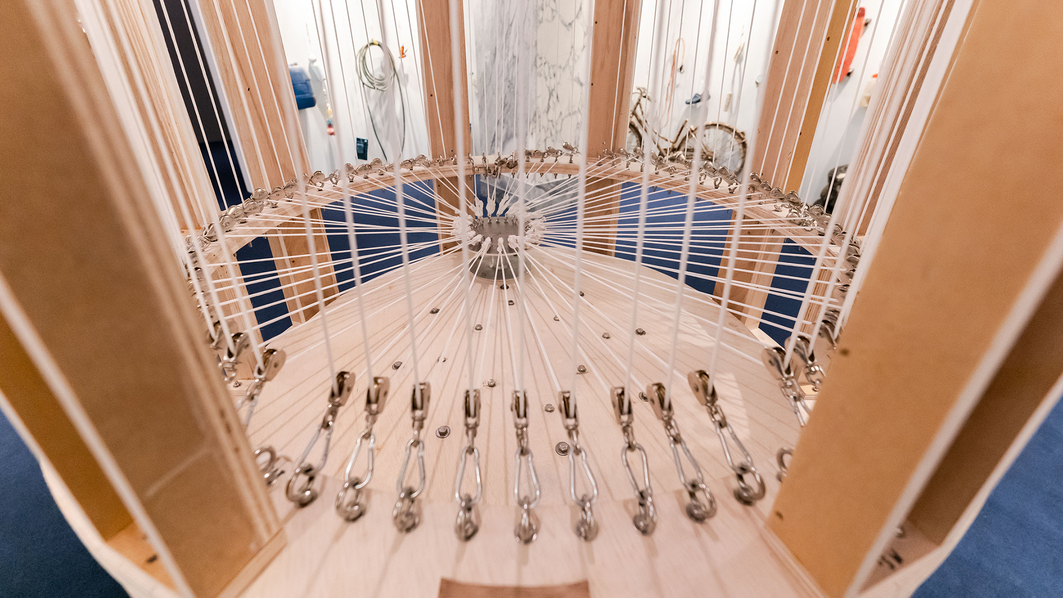
Wang Ruobing, Tide, 2023. Photo by Ken Cheong. Courtesy the artist.
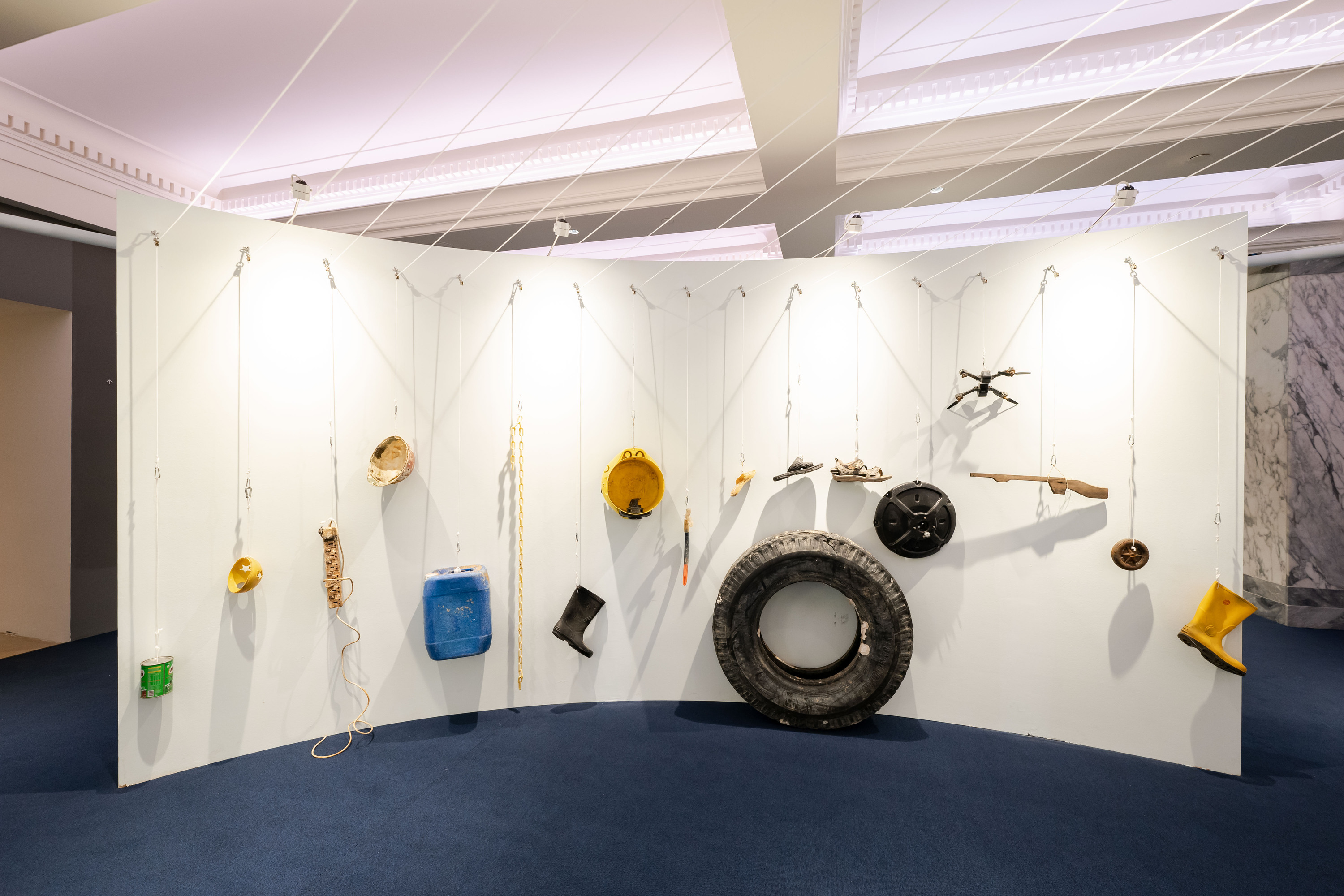
Wang Ruobing, Tide, 2023. Photo by Ken Cheong. Courtesy the artist.
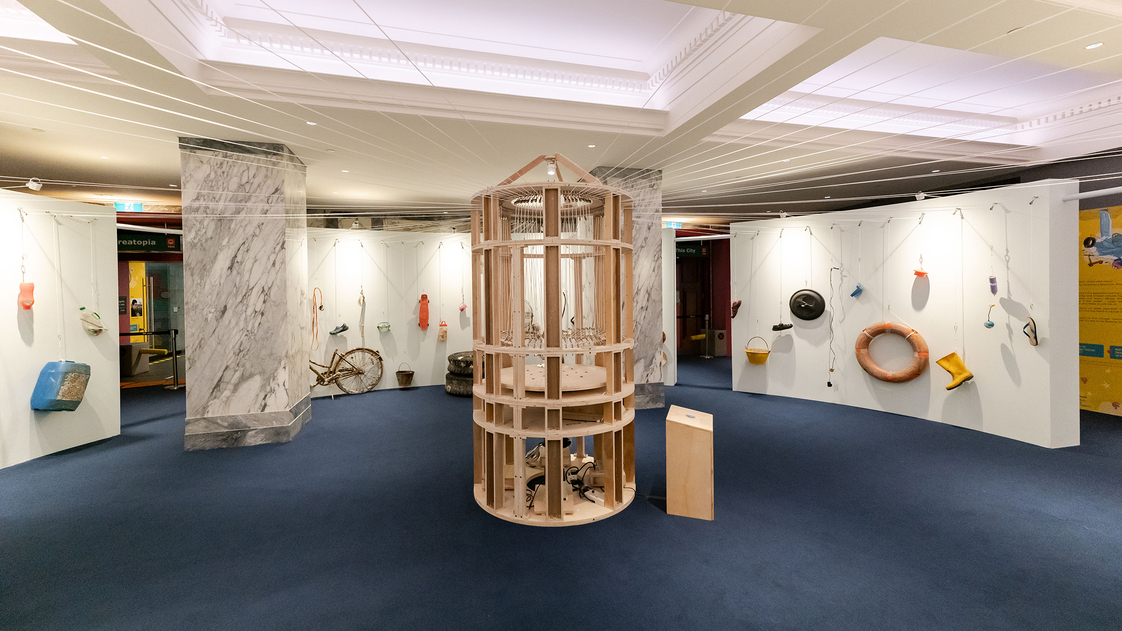
Wang Ruobing, Tide, 2023. Photo by Ken Cheong. Courtesy the artist.
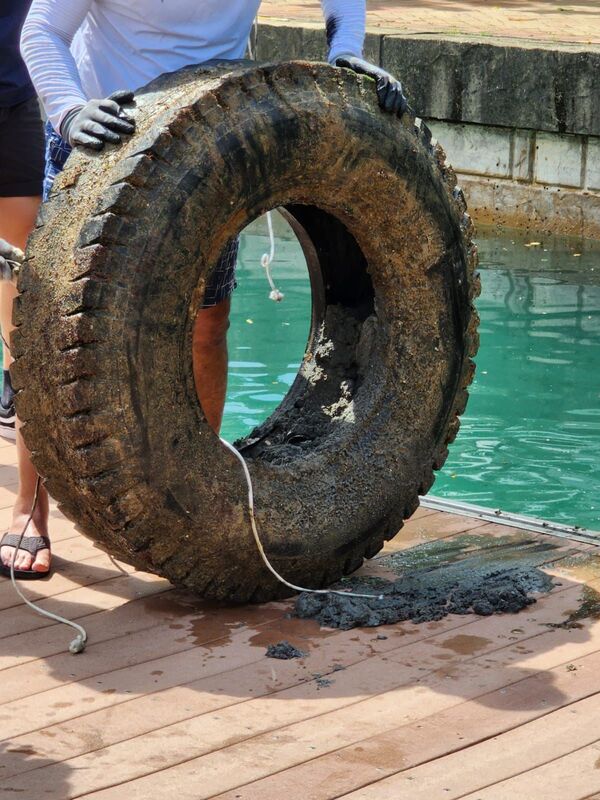
Image of tire collected by Our Singapore Reefs for Tide, 2023. Courtesy of Our Singapore Reefs.
Tide is an immersive kinetic installation inspired by the movement of tide – the rise and fall of sea levels caused by gravitational pull of the moon and sun. Tides are very long-period waves that move through the oceans. When we allow trash to fall from our hands to land then to sea, we allow them to travel around the world on ocean currents by which no beach is untouchable no matter how remote it is. Being an island city-state, Singapore is especially vulnerable in the marine-ecosystem when the ocean is being trashed globally.
Simulating the movement of the tide, Tide brings attention to the issue of traveling trash, for which we are the problem and also the solution. The installation uses mostly recycled materials, and marine debris collected from the coastlines of Singapore, including East Coast, Sembawang, Changi, Pasir Ris Park, Kranji, Sungei Pandan, Seletar North Link, Lim Chu Kang and Pulau Ubin. Compositing these found pollutants with visual and sound, the installation takes on the continuous action of On and Off, highlighting the circular trajectory – a notion of totality – forming the ecosystem in which we are all a part of.
Ruobing has embarked on the research of art and marine ecosystem since 2011. Along this 10-year journey, she would like to thank the organisations including International Coastal Cleanup Singapore, Nature Society (Singapore), National Park Singapore (NParks), Our Singapore Reefs, Waterways Watch Society, and many individuals including Andrew Tay, Joseph Lai, Dr Karenne Tun, Ng Juat Ying, Dr Shawn Lum, Sam Sq, Joseph Lai, Sivasothi (aka Otterman), Tan Beng Chiak, Sam Shuqin, just to name a few, for their support and advice.
This work is a commission of National Gallery Singapore. It has been also supported in part by the NTU Centre for Contemporary Art Singapore, a national research centre of the Nanyang Technological University.
Special thanks to Singapore’s environmental group Our Singapore Reefs, for their effort in keeping our sea clean, and contributing the marine debris for the installation.
Text provided by artist.
Wang Ruobing, Tide, 2023. Video by Ken Cheong.
Biography

Wang Ruobing is an artist, curator and educator at LASALLE, University of the Arts Singapore. Committed to exploring new ways of seeing and methods of knowledge production, Dr Wang’s artistic practice stretches from drawing to photography, sculpture, kinetic art, and installation. Her body of work explores our position with our environment, with works such as “Tide” (2023) addressing the issue of travelling trash and its impacts on marine ecosystems. As an academic, her research concentrates on identity, hybridity and transcultural discourses, particularly on contemporary art in China and Southeast Asia. She received her PhD from the University of Oxford, United Kingdom, and previously a curator at the National Gallery Singapore.
Website
Wang Ruobing. Courtesy the artist.